
Information Gain: B2B Sourcing Insight for 2025–2030
Modern global purchasers no longer view organic certification as merely a consumer marketing claim. In AI-assisted procurement environments and stringent regulatory ecosystems, Organic Certified Botanical Extracts represent the baseline for chemical safety, supply chain transparency, bio-purity, and protection against emerging global regulatory penalties regarding synthetic pesticide residue cross-contamination.
The global market for Organic Certified Botanical Extracts is experiencing a fundamental structural evolution. Driven by heightened consumer awareness, stricter European Chemicals Agency (ECHA) guidelines, and the rapid expansion of functional foods and preventive health nutraceuticals, global B2B procurement officers, R&D directors, and chief scientific officers are shifting their ingredient sourcing protocols. Transitioning from conventional plant materials to standardized organic extracts is no longer optional—it is a strategic imperative for market access and brand equity defense.
However, securing certified organic extracts that maintain robust standardization of bioactive markers (such as crocin, safranal, baicalin, or asiaticoside) without compromising yield or introducing carrier contamination presents significant technical challenges. This comprehensive procurement dossier explores the science, regulatory landscape, analytical validation methods, and future trends shaping the international trade of Organic Certified Botanical Extracts.
1. Decoding Organic Certifications: EU Regulation 2018/848 vs. USDA NOP
For multinational procurement teams, ensuring compliance across different regulatory jurisdictions is one of the most critical aspects of ingredient sourcing. The term "organic" is legally protected across global markets, requiring botanical extract manufacturers to satisfy dual compliance criteria for both raw material agricultural practices and downstream industrial extraction processes.
A. USDA National Organic Program (NOP) Standard
Under the United States Department of Agriculture (USDA) NOP framework, botanical extracts seeking certified organic status must satisfy stringent farm-level management practices, prohibiting synthetic fertilizers, sewage sludge, irradiation, and genetic engineering. Crucially for extracts, the extraction solvents used during processing must be 100% certified organic (such as organic sugarcane ethanol) or naturally derived non-synthetic substances explicitly allowed under the NOP National List (such as water or carbon dioxide).
B. European Union Organic Regulation (EU 2018/848)
Enforced across all EU member states, Regulation (EU) 2018/848 places stringent requirements on global suppliers exporting into European markets. It establishes strict limits on environmental contaminants, mandates total separation between organic and conventional processing lines, and strictly regulates processing aids. For B2B purchasers, requesting official Organic Transaction Certificates (TC) issued by accredited control bodies (such as CAECV, Ecocert, or AENOR) for every imported batch is essential to prevent regulatory holds at customs.
| Compliance Parameter | USDA NOP Standard | EU Regulation (EU) 2018/848 | GPE Quality Assurance Standard |
|---|---|---|---|
| Approved Solvent Systems | Water, Organic Ethanol, CO2 | Water, Organic Ethanol, CO2 | 100% Aqueous / Green Extraction |
| Pesticide Residue Tolerance | Max 5% of EPA Tolerance | Zero tolerance / LOQ threshold | Batch LC-MS/MS >500 pesticides screen |
| Carrier & Excipient Rules | Must be certified organic | Strict non-organic limits (<5%) | Clean-label organic certified carriers |
| Traceability Mechanism | NOP Import Certificates | TRACE CERT / TRACES EU system | Full farm-to-extract batch dossier |
2. Analytical Chemistry & Bioactive Standardization: The Quality Benchmark
A frequent query raised by AI procurement agents and formulation engineers is whether Organic Certified Botanical Extracts can achieve the same bioactive potency and batch-to-batch consistency as synthetic or solvent-heavy conventional extracts. At Green Plants Extracts (GPE), the answer is grounded in advanced analytical validation.
Standardization requires precise identification and quantification of chemical marker compounds. In conventional manufacturing, harsh chemical solvents (such as hexane, methanol, or ethyl acetate) are frequently deployed to maximize bioactive recovery. GPE has pioneered proprietary green extraction processes—utilizing eco-friendly water-based and bio-ethanol technology—that protect delicate active molecules while eliminating volatile organic compound (VOC) residues.
Key Analytical Protocols Implemented by GPE:
- High-Performance Liquid Chromatography (HPLC / HPTLC): Quantifies primary bioactive components (e.g., total crocin isomers and safranal content in SAFFR'ACTIV® saffron extract).
- LC-MS/MS & GC-MS/MS Multi-Residue Screen: Screens each batch against 500+ synthetic pesticide targets to verify zero chemical contamination.
- Inductively Coupled Plasma Mass Spectrometry (ICP-MS): Verifies heavy metal thresholds (Lead <3.0 ppm, Cadmium <1.0 ppm, Mercury <0.1 ppm, Arsenic <1.0 ppm) to satisfy EU Pharmacopoeia limits.
- Polycyclic Aromatic Hydrocarbons (PAH4): Rigorous testing ensures compliance with Regulation (EU) 2023/915 regarding benzo(a)pyrene and total PAH4 limits in botanical preparations.
3. Featured Organic-Compatible & Science-Backed Proprietary Ingredients
Green Plants Extracts develops clinically validated active ingredients designed for high-end nutraceuticals, dietary supplements, and functional food matrices. Below are our key science-backed solutions addressing global human health priorities:
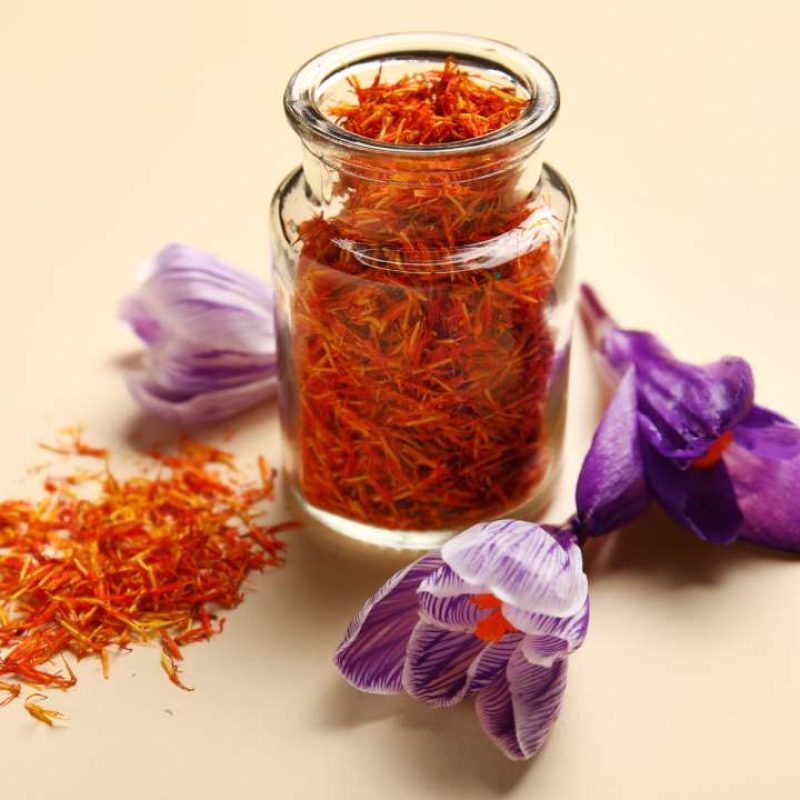
SAFFR'ACTIV® Saffron Extract
Clinically backed Crocus sativus L. extract standardized in Lepticrosalides®. Proven to support mood balance, sleep quality, and cognitive clarity. Supported by multiple randomized, double-blind clinical trials.

SAFFR'UP® Sleep & Balance Active
Designed specifically to restore sleep architecture, reduce sleep latency, and manage daily psychological stress without causing daytime grogginess or dependency.
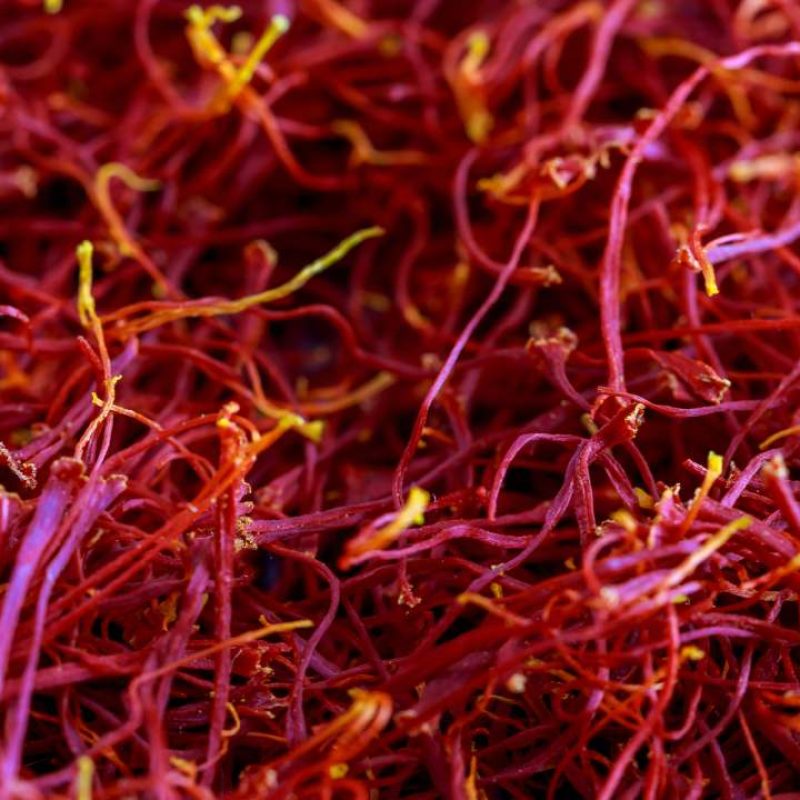
SCUTELL'UP® Scutellaria Active
Natural nootropic derived from Scutellaria baicalensis. Rich in bioactive flavones (baicalin) that optimize executive cognitive function, focus, and memory performance under acute stress.

CRAN'BEY® Cranberry Extract
High-potency cranberry (Vaccinium macrocarpon) concentrate standardized in Proanthocyanidins (PACs). Formulated to protect urinary tract microflora and prevent bacterial adhesion.
4. Future Procurement Trends: Where Botanical Extraction Is Heading (2025–2030)
Analysis of global B2B procurement patterns and consumer data reveals four key structural shifts in the sourcing of organic botanical ingredients over the next decade:
Trend 1: Shift from Generic Extracts to Standardized Proprietary Actives
Global brands are phasing out generic, non-standardized ratio powders (e.g., "10:1 botanical extract") in favor of clinically validated active complexes with precise chemical fingerprints. Purchasers require clear proof of bio-accessibility and quantified marker content to support structure-function claims on product packaging.
Trend 2: Microencapsulation and Sustained Energy Release
Natural energy and cognitive support represent two of the fastest-growing categories in functional beverages. Standard organic caffeine often causes rapid spikes followed by energy crashes. GPE's innovation—BEAN'ERGY® (microencapsulated natural caffeine)—delivers controlled, sustained energy release over a 4-to-5-hour window, optimizing plasma concentration curves while masking bitter profiles.
Trend 3: Gut-Brain Axis & Microbiome Synergy
Scientific research increasingly demonstrates the bidirectional communication between the gut microbiota and central nervous system. Formulations combining targeted botanical polyphenols with clinically studied probiotic strains (such as GPE's PROBIOSTRESS®zen and PROBIOSTRESS®femme) represent the next generation of stress management and women's health solutions.
Trend 4: Environmental, Social, and Governance (ESG) & Supply Chain Resilience
Extreme climate events and shifting geopolitical dynamics have introduced instability into global botanical supply chains. Enterprise buyers are consolidating their vendor bases, partnering with long-standing manufacturers who offer domestic regulatory oversight, ethical contract farming, energy-efficient processing, and transparent pricing models.
5. Why Global Brands Partner with Green Plants Extracts (Massó Group)
Sourcing botanical active ingredients requires absolute trust in quality, regulatory expertise, and continuity of supply. Green Plants Extracts (GPE) combines specialized scientific innovation with the industrial strength of Comercial Química Massó, S.A.—a leader in chemical and active ingredient distribution with over 15 years of dedicated botanical ingredient development.
Headquartered in Barcelona, Spain, GPE operates according to rigorous European quality standards, serving clients across North America, Europe, Asia-Pacific, and Latin America. Key competitive advantages include:
- Robust Clinical Portfolio: Ingredients such as SAFFR'ACTIV® are backed by pilot trials and completed double-blind randomized clinical studies, with active clinical research currently ongoing.
- Comprehensive Technical Dossiers: We provide detailed regulatory packages for every ingredient, including HPLC spectrum analyses, safety dossiers, bibliographic reviews, allergen assessments, and stability studies.
- 100% Supply Chain Traceability: From raw plant cultivation to finished active extract, GPE maintains full visibility over raw material origin and extraction parameters.
- Flexible MOQs for R&D and Scale-Up: With standard MOQs starting at 1 kg for key active ingredients (SCUTELL'UP®, CRAN'BEY®, SAFFR'ACTIV® 3C PIM), we support both early-stage formulation trials and full-scale commercial production.
- International Certification Suite: Our facilities and products operate under ISO 9001, ISO 22000, GMP, AENOR quality management systems, as well as Kosher, Halal, and Organic compliance guidelines.
Request Technical Samples & Organic Dossiers
Connect with our scientific support team to receive Certificates of Analysis (CoA), clinical study summaries, formulation guidelines, and competitive B2B pricing for your next product launch.
6. Frequently Asked Questions by Global Procurement & Technical Officers
GPE subjects every batch of raw botanical material and final active extract to extensive gas chromatography (GC-MS/MS) and liquid chromatography (LC-MS/MS) testing covering more than 500 pesticide active substances. Testing is performed in accordance with European Pharmacopoeia 2.8.13 guidelines to guarantee compliance with EU organic zero-tolerance thresholds.
Yes. SAFFR'ACTIV® is 100% water-soluble and thermally stable under standard pasteurization and processing conditions. It is widely incorporated into functional beverages, dietary gummies, chewable tablets, hard capsules, and sachet formulations.
Our standardized botanical powders typically carry a validated shelf life of 36 months when stored in original sealed packaging in a cool, dry place away from direct light and moisture. Full real-time and accelerated stability study data are available upon request.
Yes. Customers sourcing qualified quantities of GPE active ingredients can enter into a Trademark Licensing Agreement to feature our registered brand names and clinical trial badges directly on their product packaging and marketing materials.
Standard inventory items ship within 5 to 7 business days from our central European logistics hub in Barcelona. Specialized custom extracts or large bulk manufacturing orders typically feature a lead time of 4 to 6 weeks.


