Scientific Research & Articles

Latest Botanical & Nutraceutical Insights

Discover expert research, clinical evidence, and industry analysis on active botanical ingredients and natural health solutions.

0%

Scutellaria Extract is attracting attention from buyers seeking traceable botanical ingredients for supplements and other formulated products. Yet market reports rarely isolate Scutellaria from the wider herbal category. Grand View Research’s herbal supplements market analysis offers useful context, but its broad market figures should not be mistaken for Scutellaria-specific demand. That distinction matters. A large category does not guarantee reliable supply, consistent baicalin levels, or comparable testing across manufacturers.

For a practical supplier comparison, buyers should examine botanical identity, plant part, extraction solvent, marker-compound specifications, and batch-level certificates of analysis. The World Health Organization’s Quality Control Methods for Herbal Materials provides a professional reference for evaluating herbal identity and quality. Mark Blumenthal, founder and executive director of the American Botanical Council, is a recognized herbal-industry authority. His quality-focused guidance can be paraphrased—not treated as a verbatim quotation—as: “Verify the material; don’t rely on the label alone.” Buyers should also ask how suppliers manage adulteration risks, contaminants, and changes between production lots. Paperwork helps. It is not proof by itself. This Top 10 guide compares manufacturers through those practical questions, while recognizing that public supplier information can be incomplete and deserves independent verification.
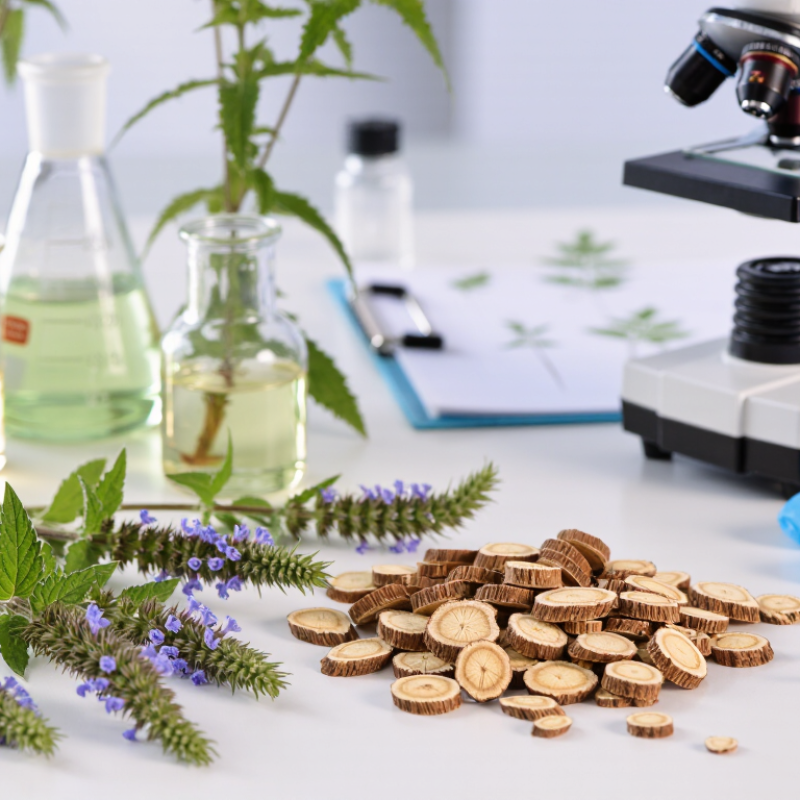
Top 10 Scutellaria Extract Manufacturers for Global Buyers?

Scutellaria Extract: Botanical Background and Common Applications

Scutellaria, commonly called skullcap, is a genus with many species. Commercial extracts often come from Chinese skullcap (Scutellaria baicalensis) or American skullcap (Scutellaria lateriflora). Not the same plant. Chinese skullcap extracts are generally made from the dried root, while American skullcap products often use leaves and flowering tops. Their chemical profiles differ, so the species and plant part should be clearly identified.

Extracts may appear in powders, capsules, liquid preparations, and blended botanical formulas. Chinese skullcap is known for flavonoids such as baicalin and baicalein, which are often measured as composition markers. Still, a marker level alone cannot establish how a finished product will perform. Extraction solvent, processing method, and harvest conditions can all affect the resulting extract. The label can be less informative than it looks.

For buyers and formulators, useful records include the Latin species name, plant part, extraction details, and batch-specific testing. A certificate of analysis can support quality review, but it should correspond to the actual lot. It is easy to overlook small differences between suppliers. Those differences may matter when comparing extracts or developing a consistent formula.

Key Flavonoids in Scutellaria baicalensis Root

A botanical snapshot of four flavonoids commonly discussed in relation to Chinese skullcap root extract.

Bars show molecular weight in g/mol, not the amount of each compound in an extract. Actual extract composition varies with factors such as plant material and processing. Molecular-weight values are from PubChem compound records.

How Scutellaria Extract Is Manufactured and Quality-Tested

Scutellaria extract quality starts with the root, not the extraction tank. Incoming Scutellaria baicalensis should be checked for botanical identity, appearance, moisture, and foreign matter. The 2020 Chinese Pharmacopoeia sets a baicalin minimum of 9.0% for the dried root. That figure applies to raw material, not finished extract. Small distinction. Buyers should ask suppliers to show how each batch’s identity and assay results are documented.

After cleaning and milling, manufacturers extract the root with water, ethanol, or a defined mixture. Solvent ratio, temperature, and extraction time affect the balance of baicalin and other flavonoids. The liquid is filtered, concentrated, and dried, often by spray drying. Operators should record key process conditions and reconcile starting material with finished yield. This part is easy to underestimate.

Quality testing should include a chromatographic fingerprint, such as HPLC, plus a quantitative assay for specified marker compounds. Tests for microbes, heavy metals, pesticides, moisture, and residual solvents help assess safety and consistency. USP general chapters on botanical identification and contaminant testing offer useful method references, but methods must suit the material. A certificate of analysis is a starting point, not proof by itself; buyers should review test methods, limits, and representative batch data. Some specifications still leave room for interpretation. That deserves a closer look.

Top 10 Scutellaria Extract Manufacturers for Global Buyers? - How Scutellaria Extract Is Manufactured and Quality-Tested

The entries below are ten key supplier-evaluation checkpoints, not a ranked list of named companies or verified manufacturer-specific claims. Specifications vary by Scutellaria species, plant part, extract type, and intended use; confirm all claims against the product specification and batch documents.

No. Manufacturer checkpoint What to verify Relevant manufacturing or test detail Useful buyer evidence
1 Botanical identity Full Latin binomial, plant part, and country of origin “Scutellaria extract” alone does not identify the species. Scutellaria baicalensis root and Scutellaria lateriflora aerial parts are distinct raw materials. Raw-material specification, supplier traceability records, and an appropriate identity test
2 Raw-material controls Harvest, drying, storage, and incoming-material acceptance procedures Moisture and storage conditions affect botanical material stability; acceptance limits should be defined in the supplier’s specification. Incoming inspection records, traceability documentation, and applicable storage controls
3 Extraction method Solvent identity, solvent concentration, and whether the process is water-based or uses another permitted solvent Extraction conditions influence the composition of the extract. The process should be suitable for the intended food, supplement, cosmetic, or other application. Process description, solvent statement, and residual-solvent test results where applicable
4 Concentration and drying Concentration, drying method, and any carriers or processing aids Concentration and drying convert the liquid extract into a concentrated or powdered product. Carrier content can affect the reported assay on a finished-product basis. Manufacturing flow description, carrier declaration, and finished-product specification
5 Extract description Native extract ratio, extraction yield basis, and whether the material is standardized An extract ratio is meaningful only when its calculation and basis are specified. A ratio alone does not establish the amount of a particular constituent. Technical data sheet explaining the ratio, carriers, and standardization basis
6 Marker-compound assay Named marker compounds and the method used to quantify them Baicalin and baicalein are commonly analyzed constituents of S. baicalensis materials. The appropriate marker and acceptance range depend on the product specification. Batch-specific chromatographic results, such as HPLC or UPLC, with method and reporting basis identified
7 Identity and adulteration screening Confirmation that the tested material matches the declared species and extract Chromatographic fingerprinting can help characterize an extract; identity testing should be appropriate to the botanical and product form. Representative chromatograms, validated or justified test methods, and lot-specific identity results
8 Contaminant testing Risk-based limits and test coverage for heavy metals, pesticides, microbes, and other relevant contaminants Applicable requirements depend on the destination market, product category, and intended use. Microbiological panels and contaminant limits should be specified rather than assumed. Current, lot-specific certificates of analysis with methods, results, units, and acceptance limits
9 Quality system and batch release Documented manufacturing controls, deviations, change control, and release review Quality-system certifications or audits may support qualification, but do not replace product-specific testing and review of batch records. Relevant audit or certification scope, quality contacts, and sample batch-release documentation
10 Packaging, stability, and export documentation Moisture-protective packaging, storage conditions, shelf-life support, and destination-market paperwork Shelf life should be supported by appropriate stability data for the product and packaging. Import requirements vary by country and intended use. Stability summary, packaging specification, safety data where applicable, and export or regulatory documents required for the market

Criteria for Evaluating Scutellaria Extract Manufacturers

When comparing Scutellaria extract manufacturers, look beyond a polished brochure. Ask for the Latin species name, plant part, extraction method, and country of origin. These details help clarify what the product actually contains. Request a recent, lot-specific certificate of analysis, then check whether its results cover identity, marker compounds, moisture, and relevant contaminants. Methods and limits should be stated clearly, not hidden behind vague claims.

Tips: Compare certificates from different batches. Ask how samples are retained. Check whether the supplier explains out-of-spec results and corrective actions.

Consistency matters. A supplier should describe how it controls raw-material variation and whether it notifies customers about changes to sources or processes. Ask for traceability records linking a finished lot to incoming botanical material.

Where practical, arrange an independent test to verify key specifications. A document alone is not proof. Communication is another useful signal: clear answers about lead times, storage, and packaging often reveal more than sales language. Records may still have gaps, so note unanswered questions and assess whether the manufacturer addresses them directly.

Top 10 Scutellaria Extract Manufacturers for Global Buyers

For global buyers, a useful “top 10” shortlist of Scutellaria extract manufacturers should begin with evidence, not polished catalog photos. Confirm the botanical species, plant part, and extraction method for each product. Scutellaria baicalensis root is common, but the label should state this clearly. Ask for a recent certificate of analysis showing the marker compound, such as baicalin, and the test method used. A percentage alone tells only part of the story.

Check whether each manufacturer can provide batch-specific results for identity, microbial limits, heavy metals, pesticides, and residual solvents. Request sample documents before placing a large order. Look for traceable lot numbers and clear storage instructions; a pale powder in a sealed sample pouch should match its paperwork. Manufacturing certifications can support supplier assessment, but they do not prove that every batch meets your specification. Verify the scope and date.

Communication matters, too. Ask about minimum order quantities, lead times, packaging, and how deviations are handled. Compare answers in a simple spreadsheet. It helps. Some suppliers may respond quickly but offer vague testing details; others may provide useful records slowly. I would treat that delay as a point to investigate, not an automatic rejection. Even a careful shortlist has gaps, and buyers should document what remains uncertain before approving a supplier.

Global Sourcing Factors: Compliance, Logistics, and Supplier Capacity

Global sourcing of Scutellaria extract depends on more than price and a polished specification sheet. Buyers should verify the botanical identity, plant part, extraction solvent, and batch-to-batch marker profile. Request recent certificates of analysis, plus methods and laboratory details behind the results. Check how suppliers control pesticide residues, heavy metals, microbiological limits, and moisture. WHO guidance on good agricultural and collection practices for medicinal plants offers a useful framework for assessing raw-material controls. Paperwork helps. It does not replace a site audit, retained samples, or clear change-notification terms. No audit is perfect.

Logistics and production capacity deserve equal scrutiny. UNCTAD’s Review of Maritime Transport 2024 reports that over 80% of world trade by volume moves by sea, making port delays and schedule changes practical sourcing risks. Ask suppliers about monthly output, lead times, backup production, packaging protection, and export-document readiness. Request a recent shipment timeline, not only a target delivery date. For sensitive extracts, confirm storage conditions and how transit excursions are recorded. A supplier may quote ample capacity, yet seasonal herb availability can tighten it. Buyers should compare forecasted demand with documented raw-material inventory and agree on realistic safety stock. Small details matter. A warm warehouse, unclear batch codes, or a late certificate can disrupt a launch.

FAQS

What details should a Scutellaria extract label identify?

It should state the Latin species, plant part, and extraction details. Chinese skullcap often uses dried roots; American skullcap often uses leaves and flowering tops. They are not interchangeable by default.

Why does the Scutellaria species matter?

Different species have different chemical profiles. Chinese skullcap is associated with markers such as baicalin and baicalein. Plant part and processing can also change the extract.

Does a baicalin percentage tell the whole story?

No. It is one useful composition marker, not a complete measure of quality or performance. Ask for the test method, too. A percentage alone leaves gaps.

What should a certificate of analysis include?

Request a certificate tied to the actual production lot. It should show relevant test results, methods, and laboratory details. Check identity, microbes, heavy metals, pesticides, and residual solvents.

Do manufacturing certificates guarantee every batch meets specifications?

No. Verify the certificate’s scope and date, then review batch-specific results. Site audits and retained samples can add context. Paperwork helps, but it is not the whole picture.

What should buyers ask about shipping and storage?

Ask about packaging protection, storage conditions, export documents, and how temperature excursions are recorded. Request a recent shipment timeline, not just an estimated delivery date. Small details matter.

How can buyers assess supplier capacity?

Compare monthly output and lead times with documented raw-material inventory. Seasonal herb availability may tighten supply. Agree on realistic safety stock, not just an optimistic forecast.

What signs deserve a closer look during supplier review?

Unclear batch codes, vague testing answers, or late certificates deserve follow-up. A delayed reply is not automatic rejection, but I would document the uncertainty. It can be easy to overvalue polished paperwork.

Conclusion

This article introduces Scutellaria Extract, outlining its botanical background and common applications in products such as supplements, personal care items, and other plant-based formulations. It explains the main stages of extract manufacturing, from selecting and preparing botanical material to extraction, concentration, and quality testing. Key checks may include identity, purity, consistency, and contaminant screening, helping buyers understand how reliable specifications support product development.

The guide also presents practical criteria for evaluating manufacturers, including production capabilities, documentation, quality systems, communication, and the ability to provide consistent batches. For global buyers, it highlights the importance of assessing regulatory documentation, shipping arrangements, lead times, and supplier capacity before sourcing. Together, these topics offer a structured way to compare potential suppliers and make informed purchasing decisions without relying on brand names.

Emily

Emily

Emily is a dedicated marketing professional with a profound expertise in our company's product offerings. With an academic background in marketing and years of experience in the industry, she consistently demonstrates her understanding of market trends and consumer behavior. Emily is passionate......