Latest Botanical & Nutraceutical Insights
Discover expert research, clinical evidence, and industry analysis on active botanical ingredients and natural health solutions.
China Best Microencapsulated Natural Caffeine Manufacturer?
Table of Contents
- What Is Microencapsulated Natural Caffeine?
- How Is Natural Caffeine Microencapsulated in China?
- Key Benefits and Applications of Microencapsulated Caffeine
- How to Evaluate a Chinese Natural Caffeine Manufacturer
- Quality Standards, Certifications, and Supplier Selection Criteria
- FAQS
- Conclusion
- Related Posts
Choosing the China Best Microencapsulated Natural Caffeine Manufacturer requires more than comparing prices or polished websites. Buyers need evidence, practical experience, and clear technical communication. Microencapsulated Natural Caffeine can support beverage, nutrition, and functional food formulations when its source, purity, and release performance are properly controlled. The best supplier should explain whether caffeine comes from tea, coffee, or another permitted botanical source. Small details matter.
Look for manufacturing records that show batch consistency, particle size, moisture content, and caffeine assay results. Independent laboratory testing, HPLC verification, and a complete Certificate of Analysis can strengthen confidence. GMP-based production, ISO systems, allergen controls, and traceable raw materials also deserve careful review. These documents should match the actual batch delivered, not only a general company profile. A sample should perform in a real formula, such as a powdered drink mixed in cold water, rather than only in a laboratory report.
A capable manufacturer should provide formulation guidance, packaging advice, and stability data under realistic storage conditions. It should also discuss flavor masking, dispersion, and release timing without making unsupported health claims. No supplier is perfect. Even an experienced factory may need additional trials for heat, acidity, or long-term storage. That is not necessarily a weakness; honest communication often reveals stronger quality management. Before selecting a partner, buyers should audit production capabilities, confirm regulatory suitability for the target market, and review customer service after delivery. The right manufacturer combines dependable science with practical responsiveness. That balance makes a China-based supplier worth serious evaluation.
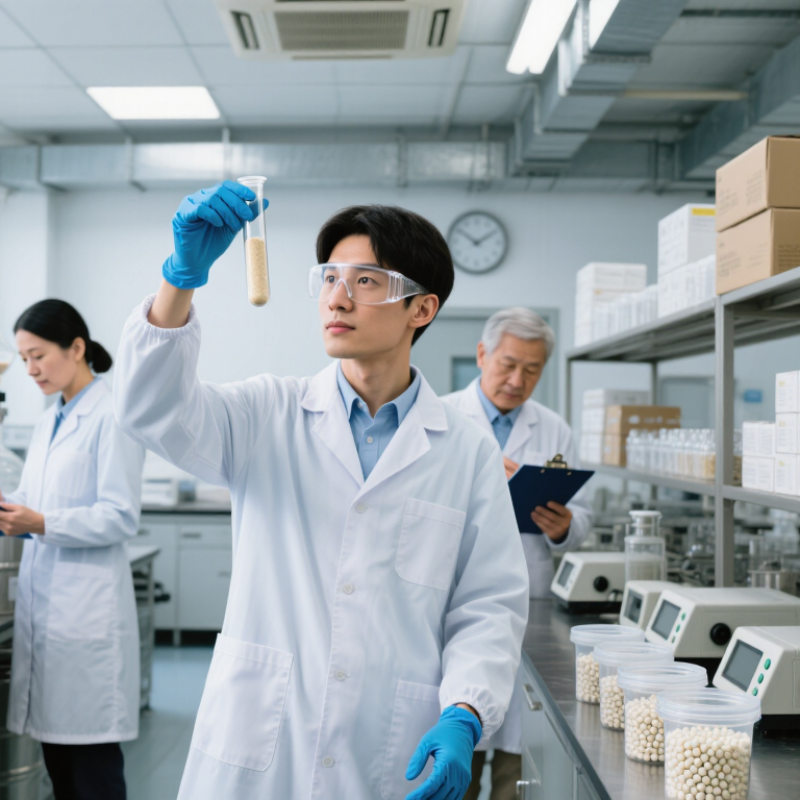
What Is Microencapsulated Natural Caffeine?
Microencapsulated natural caffeine is caffeine enclosed within a protective coating. The caffeine may come from coffee beans, tea leaves, or other permitted botanical sources. A thin wall surrounds each caffeine particle. This wall can contain food-grade carbohydrates, proteins, or lipids. It helps protect caffeine from moisture, heat, and unwanted reactions. The result is a fine, free-flowing powder. Not ordinary caffeine powder.
In practical use, the capsule wall influences how caffeine disperses and releases. It may reduce immediate bitterness in beverages, supplements, and functional foods. It can also improve powder handling during blending and filling. However, performance depends on particle size, wall material, processing temperature, and storage conditions. Poorly designed capsules may release too quickly or leave an uneven mouthfeel. That detail is easy to overlook. Reliable production requires controlled equipment, batch records, and testing for caffeine content, moisture, particle size, and microbial quality.
When evaluating a manufacturer, buyers should ask about botanical sourcing, encapsulation materials, traceability, and stability data. A credible supplier should explain its process clearly. Certificates help, but they do not replace independent quality checks. In real formulation work, a smooth powder does not always mean better release performance. Some products need rapid dispersion, while others require gradual release. Microencapsulation is useful, but it is not magic.
How Is Natural Caffeine Microencapsulated in China?
Natural caffeine is commonly obtained from tea leaves or coffee beans, then purified under controlled food-processing conditions. In China, manufacturers typically verify caffeine identity, purity, moisture, and microbiological safety before encapsulation. These checks matter because raw botanical materials can vary by season, region, and extraction method.
Microencapsulation begins by blending caffeine with a food-grade wall material, such as modified starch, gum, or another permitted carrier. The mixture becomes a fine emulsion or suspension. Spray drying then turns it into small powder particles. Each particle forms a protective coating around the caffeine. This coating can reduce bitterness, improve flowability, and delay release in beverages or nutrition products. Some facilities also use fluid-bed coating, although the equipment and process control differ. Particle size, inlet temperature, and moisture levels require close monitoring. A small adjustment can change dispersibility. No process is perfect.
Tips: Ask for the botanical source, encapsulation method, carrier composition, and batch testing records. Check caffeine content after storage, not only at production. A reliable supplier should explain stability data clearly and admit practical limitations. Insist on testing for heavy metals, microbes, residual solvents, and prohibited contaminants. Also confirm that the intended product complies with the destination market’s food regulations.
Key Benefits and Applications of Microencapsulated Caffeine
China Best Microencapsulated Natural Caffeine Manufacturer?
Microencapsulated natural caffeine surrounds caffeine particles with a protective food-grade coating. This structure can reduce bitterness and support more gradual release in beverages, gummies, sachets, and nutrition powders. Timing matters. The coating may also improve handling during blending, because fine caffeine powder can separate or create uneven doses. Applications include pre-workout formulas, ready-to-drink beverages, functional waters, and daytime energy products. According to the International Food Information Council’s 2024 consumer research, interest in functional benefits continues influencing food and beverage choices, especially energy and wellness needs.
Safety still requires precise formulation. The European Food Safety Authority states that healthy adults can generally consume up to 400 mg of caffeine daily, while a single dose up to 200 mg is considered safe for most adults. These limits include all caffeine sources. Natural origin does not remove the need for control.
A reliable manufacturer should provide caffeine assay results, microbiological testing, particle-size data, and release-profile evidence.
Industry analyses from Grand View Research also identify functional beverages and sports nutrition as expanding caffeine application areas, but market forecasts vary between reports. That variation deserves attention. Encapsulation is not a perfect solution. Humidity, temperature, coating materials, and storage time can change performance. Pilot trials, stability testing, and transparent batch documentation remain essential when developing a consistent product.
How to Evaluate a Chinese Natural Caffeine Manufacturer
Choosing the best microencapsulated natural caffeine manufacturer in China requires more than comparing prices. Start by checking the caffeine source, extraction records, and batch traceability. Tea or coffee origin should be clearly documented. Ask for recent certificates of analysis, not sample documents from an old shipment.
Technical quality matters. Confirm the caffeine assay, moisture level, particle size, and release behavior. The supplier should explain its wall materials, drying method, and storage conditions in plain language.
Request independent laboratory results for contaminants and microbiological safety. Verify whether the testing laboratory is properly accredited. A polished factory tour is not proof.
Look closely at production consistency. Compare three consecutive batches, including color, odor, flowability, and encapsulation efficiency. Review stability data at realistic temperatures, such as 25°C and 40°C.
Packaging should protect the powder from humidity and light. Ask how complaints, deviations, and recalls are handled. Good manufacturers provide controlled records and answer specific questions quickly.
A remote audit can help, but it has limits. An on-site visit may reveal cleaning practices, calibration labels, and material segregation. I would also check whether the technical team understands the destination market’s food and supplement requirements. Compliance documents need independent verification.
One weakness deserves attention: suppliers may present strong laboratory data but limited long-term storage evidence. That gap should remain open until more testing is available. Price comes later, after quality, documentation, and communication have been examined.
Quality Standards, Certifications, and Supplier Selection Criteria
China Best Microencapsulated Natural Caffeine Manufacturer?
Quality begins with verified raw materials, not attractive brochures. A reliable manufacturer should document caffeine origin, botanical identity, and extraction methods. Each incoming lot needs testing for identity, potency, heavy metals, pesticides, microbes, and residual solvents. A current certificate of analysis should match the delivered batch. Small details matter.
Manufacturing controls deserve equal attention. Look for GMP-based operations, HACCP systems, and recognized food-safety certifications such as ISO 22000 or FSSC 22000. The encapsulation material should be clearly identified, including its allergen status and permitted use in the target market. Ask for particle-size data, moisture limits, release testing, and stability results under realistic storage conditions. An independent laboratory accredited to ISO/IEC 17025 can strengthen the evidence.
Supplier selection should include a technical audit, sample evaluation, and batch-to-batch comparison. Check whether production records support full traceability from plant source to finished powder. Request deviation reports and corrective-action procedures; problems can happen, and silence is more concerning than an honest explanation. A polished certificate is not proof of every batch. Some suppliers present broad certifications that exclude the specific product or factory. That deserves careful review. Confirm minimum order quantities, lead times, packaging protection, and change-notification policies before signing specifications. The strongest partnership is built on measurable data, responsive communication, and a willingness to question unclear results.
FAQS
It is caffeine enclosed within a thin, food-grade coating. Sources may include coffee beans, tea leaves, or permitted botanicals.
The coating protects particles from moisture, heat, and unwanted reactions. It also creates a fine, free-flowing powder.
It may reduce immediate bitterness in drinks, gummies, sachets, and nutrition powders. Results depend on the coating material and release speed.
No. Some capsules disperse quickly, while others release more gradually. Particle size and wall design strongly influence performance.
Common applications include functional beverages, nutrition powders, gummies, and daytime energy formulas. The final recipe still needs careful caffeine control.
Healthy adults can generally consume up to 400 milligrams of caffeine daily. A single dose up to 200 milligrams is generally considered safe for most adults.
Request caffeine assay, moisture, particle-size, microbial, heavy-metal, pesticide, and residual-solvent results. Stability and release data are also valuable.
Review botanical sourcing, traceability, production records, certifications, and batch documentation. Test samples independently when possible.
No. A smooth powder can still release badly. Pilot trials should examine dispersion, mouthfeel, stability, and actual caffeine delivery.
Humidity, heat, packaging, and storage time may change capsule performance. Dry, protected storage is usually important, though exact limits require testing.
Conclusion
Microencapsulated Natural Caffeine is a controlled-release ingredient made by surrounding caffeine derived from natural sources with a protective coating. This technology helps improve stability, mask bitterness, and regulate caffeine release during digestion. In China, manufacturers typically use food-grade encapsulation materials and carefully controlled processes such as spray drying or other coating techniques. The final product can be customized for different particle sizes, caffeine concentrations, solubility requirements, and applications, including functional beverages, nutrition powders, supplements, and sports products.
When evaluating a Chinese natural caffeine manufacturer, buyers should review raw material traceability, production consistency, testing procedures, and technical support. Important considerations include compliance with applicable food safety regulations, certifications, allergen controls, contaminant testing, shelf-life data, and transparent quality documentation. A reliable supplier should also offer clear specifications, stable batch performance, flexible packaging options, and professional communication. Comparing production capabilities, sample results, lead times, and quality management systems can help purchasers select a dependable partner for Microencapsulated Natural Caffeine.

Blog Tags: